Antwerp
Wolf HallAntwerp is both a place of refuge and a practical crossroads in Thomas Cromwell’s story. It holds the memory of his youth as a runaway welcomed by old friends, while also linking the circulation of William Tyndale’s Testament to Cromwell’s later political and commercial work. As his circumstances change, Antwerp remains a point of contact across the Channel: intimate in recollection, consequential in the contested traffic of books, people, money, and ideas.
A refuge remembered
Cromwell’s connection to Antwerp reaches back to an earlier journey by boat. On board, he makes himself useful enough that another passenger guesses he has been a ship’s boy. When asked about his age, he first claims to be eighteen, then accepts fifteen after the men decide that figure will do. He tells them the truth about his face rather than risk being mistaken for a failed robber. Their response unsettles him: they speak of the English as cruel to their children, and their account of a child’s deference to parents makes him wonder whether children elsewhere are treated differently.
In Antwerp, the welcome is personal and familiar. At the sign of the Holy Ghost, a servant announces that Thomas has returned as though from the dead. Three older men greet him as their foundling and runaway, and their families, daughters, and dogs join in welcoming him. Here, unlike elsewhere, he is still recognized as the beaten boy he once was. The contrast gives the city a distinctive place in his memory: it does not erase his past, but receives him with affection that makes that past bearable.
The visit also brings Cromwell into the company of the brothers’ sons. When they tease him about the older man’s business and wife, he surprises himself by saying that he wants the man’s daughter, a young widow. The evidence places this declaration within his stay in Antwerp, before his return to London, and shows the city as a setting where personal desire becomes newly sayable amid the ease of an old welcome.
Books and religious reform
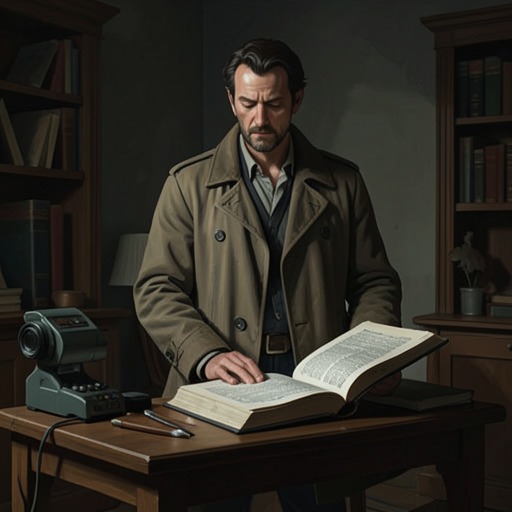
Antwerp is closely associated with the printed English Testament that Cromwell keeps in a chest. The copy is a pirated edition, printed on cheap paper and easier to obtain than the proper German printing. Its title page gives no printer’s address, only the words “PRINTED IN UTOPIA.” Cromwell knows its translator, William Tyndale, who had lodged for six months with Humphrey Monmouth in London before the city became too dangerous for him. Tyndale is presented as principled and hard, a man driven from his native shore; Thomas More calls him The Beast. Cromwell wonders whether More has seen the Antwerp edition and imagines showing it to him.
The book makes Antwerp more than a remembered destination. It is a source for a forbidden text whose modest physical form—octavo, cheap paper, and a false imprint—embodies the tension between circulation and suppression. The Testament is not merely something Cromwell possesses: its presence connects the city to the question of whether people in England may hear the Gospel in their own language.
That question becomes a matter of direct negotiation. In a letter delivered to Cromwell, Tyndale expresses his wish to come home and says he would accept the king’s choice of translator and submit to the king’s will if English readers could hear Scripture in their mother tongue. Henry VIII has not given a final refusal, but Tyndale’s translation, along with other translations, remains banned. Cromwell recognizes the limits of his effort: Henry is too timid, in his judgment, and Tyndale too unyielding. He tells Stephen Gardiner to abandon the attempt, unwilling to sacrifice himself to Tyndale’s intransigence.
Tyndale will not support Henry’s divorce, nor will Martin Luther. When Henry asks who Tyndale is to judge him, Tyndale’s reply is that one Christian may judge another. The dispute reveals the distance between the king’s political demands and the reformer’s principle. Antwerp’s printed Testament, and the person who made it, stand at the center of that distance: the city is the route by which English Scripture reaches Cromwell, even as the possibility of Tyndale’s return remains unresolved.
Commerce, diplomacy, and political reach
Antwerp also belongs to Cromwell’s broader commercial experience. His business ranges across international lending and brokerage: he lends money at interest, arranges larger loans, and charges a broker’s fee. He judges risk with an eye for the changing market, while advising indebted noblemen on how their estates might perform better. His method includes surveying land values, crop yields, water supplies, and built assets before assessing what a property can support. The evidence presents this work as practical expertise rather than simple extraction from tenants.
The city’s wider commercial world appears in recollections of the journey by sea. Passengers complain about pilots, unmarked lanes, and English monopolies; Hanse merchants, despite being called thieves, are credited with knowing how to bring a boat upstream. These disputes place Antwerp within networks of trade whose movement depends on ships, skilled navigation, and contested privileges. They also make the city a useful counterpoint to the English court: business crosses borders through arrangements and expertise that do not depend on royal ceremony.
Later, the same cross-border connections inform diplomacy. Thomas Cranmer writes from the Low Countries and towns along the Rhine about negotiations involving the Emperor and hopes for accommodation between the Emperor and the Lutheran princes, whose assistance is needed against the Turks. Cromwell struggles with England’s diplomatic practice of offering friendship and dangling promises of gold without necessarily providing it. The passage does not make Antwerp the site of every negotiation, but it situates the city within the wider continental field through which Cromwell’s commercial and political connections operate.
A changing point of contact
Antwerp’s meaning changes as Cromwell rises. For the runaway boy, it is the place where older friends call him their foundling and welcome him into a household. For the adult courtier, it is associated with a book that carries a dangerous religious argument and with the international relationships necessary to commerce and diplomacy. The two roles are linked by movement across the Channel: the boy arrives seeking shelter, while later correspondence and printed texts connect England to those living or working abroad.
The city’s significance lies in this overlap rather than in a single political event. It is intimate without being isolated: family-like welcome coexists with the circulation of trade, news, and reformist writing. The cheap Antwerp Testament and its invented imprint compress that tension into an object, while Cromwell’s attempt to negotiate Tyndale’s return shows how little control he has over the forces the book represents. Antwerp remains a place from which ideas can travel, even when the people who carry them cannot safely come home.